

Build a website that converts — in today’s digital landscape, this is crucial for businesses to thrive. It’s not just about having an online presence; it’s about creating an online experience that drives sales, generates leads, and boosts revenue.
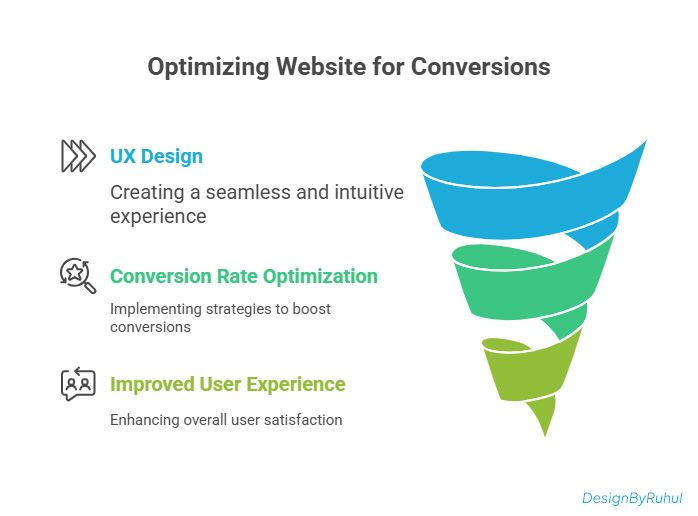
A well-designed UX is at the heart of a converting website. By understanding your users’ needs and behaviors, you can create a seamless and intuitive experience that guides them toward a purchase or conversion.
This article will explore the proven UX formula for conversions, providing you with actionable insights and practical tips to optimize your website’s conversion rate optimization.
Main Insights
- Understand the importance of a converting website for business success.
- Learn how UX design impacts conversion rates.
- Discover the key elements of a proven UX formula for conversions.
- Get practical tips on optimizing your website for maximum conversions.
- Improve your website’s overall user experience and conversion rate.
The Psychology Behind High-Converting Websites
Creating a high-converting website requires more than just an appealing design; it demands a deep understanding of the psychological factors that drive visitor behavior. When visitors land on your site, they don’t just see a collection of pages and features; they experience a series of psychological triggers that influence their decisions.
Understanding Your Visitors’ Decision-Making Process
Visitors to your website are constantly making decisions, from whether to stay or leave to whether to buy or not. Understanding this decision-making process is crucial. It involves recognizing the cognitive biases and heuristics that guide their choices. By aligning your website’s design and content with these psychological principles, you can nudge visitors toward conversion.
The Role of Trust and Credibility in Conversions
Trust is a foundational element in converting visitors into customers. When a website appears trustworthy and credible, visitors are more likely to engage with it. This can be achieved through clear and consistent branding, customer testimonials, and secure checkout processes. Trust badges and SSL certificates can also significantly enhance credibility.
Addressing Pain Points and Offering Solutions
Visitors arrive at your website with specific needs or problems they’re trying to solve. By understanding these pain points, you can tailor your content and design to offer relevant solutions. This not only improves the user experience but also increases the likelihood of conversion. Effective calls-to-action (CTAs) guide visitors toward these solutions.
| Psychological Factor | Website Element | Conversion Impact |
|---|---|---|
| Trust | Trust Badges | Increased Credibility |
| Decision-Making | Clear CTAs | Guided User Journey |
| Pain Points | Relevant Content | Enhanced User Experience |

Core Elements of a Website That Converts
Effective website design is not just about aesthetics; it’s about creating a functional, user-friendly interface that converts visitors into customers. A website that converts well is built on several foundational elements that work together to provide a seamless user experience.
Intuitive Navigation and Site Structure
A well-organized site structure and intuitive navigation are crucial for helping visitors find what they’re looking for quickly and efficiently. This involves clear categorization, minimal cognitive load, and a consistent layout across the site. By making it easy for users to navigate, you reduce friction and increase the likelihood of conversion.
Mobile Responsiveness and Cross-Device Compatibility
With the majority of web traffic coming from mobile devices, ensuring that your website is mobile-responsive is no longer optional. A responsive design adapts to different screen sizes and devices, providing an optimal viewing experience. This not only improves user experience but also enhances your site’s search engine ranking, as mobile-friendliness is now a key ranking factor.
Page Load Speed and Performance Optimization
Page load speed is a critical factor in user experience and conversion rates. A slow-loading website can lead to high bounce rates and lost sales. Optimizing images, leveraging browser caching, and minimizing HTTP requests are some strategies to improve page load speed. Tools like Google PageSpeed Insights can help identify areas for improvement.
Accessibility Features That Boost Conversions
Accessibility features are not just for users with disabilities; they improve the overall user experience. Features like clear font sizes, high contrast colors, and closed captions on videos can make your site more usable for everyone. Moreover, accessible websites tend to have better SEO, as they are easier for search engines to crawl and index.
| Core Element | Impact on Conversions |
|---|---|
| Intuitive Navigation | Reduces friction, making it easier for users to find what they need |
| Mobile Responsiveness | Improves user experience across devices, boosting engagement |
| Page Load Speed | Decreases bounce rates by loading content quickly |
| Accessibility Features | Enhances usability for all users, potentially increasing conversions |

Designing Your Website’s Conversion Funnel
The art of crafting a conversion funnel lies in understanding user behavior and optimizing accordingly. A well-designed conversion funnel is crucial for turning visitors into customers, and it involves several key elements that work together seamlessly.
Crafting Compelling Landing Pages
Landing pages are the entry point for many visitors, making them a critical component of your conversion funnel. To craft compelling landing pages, focus on clear messaging and visually appealing design. Ensure that your landing page clearly communicates the value proposition and guides visitors toward a specific action.
Strategic Call-to-Action Placement
The placement of call-to-actions (CTAs) can significantly impact conversion rates. Strategic CTA placement involves positioning CTAs where they are most visible and relevant, such as after a product description or at the end of a blog post. Use contrasting colors and clear, action-oriented language to make your CTAs stand out.
Form Design That Encourages Completion
Forms are a necessary part of many conversion funnels, but they can also be a source of friction. To encourage form completion, keep forms as short as possible and use clear labeling. Avoid unnecessary fields, and consider using autofill options to make the process smoother for users.
Checkout Process Optimization
The checkout process is the final step in your conversion funnel, and it’s crucial to get it right. Streamline the checkout process by reducing the number of steps, offering guest checkout options, and providing clear shipping information. A well-optimized checkout process can significantly reduce cart abandonment rates and increase overall conversions.
By focusing on these key areas, you can create a conversion funnel that effectively guides visitors through the buying process, ultimately leading to higher conversion rates and a more successful online business.

Content Strategies That Drive Sales
Driving sales through content requires a deep understanding of your target audience’s needs and preferences. By crafting content that resonates with your visitors, you can significantly enhance your website’s conversion potential.
Value-Focused Copywriting Techniques
Effective copywriting is about more than just writing compelling text; it’s about communicating the value of your product or service to potential customers. Focus on the benefits that your offering provides, rather than just listing features. Use clear and concise language to ensure that your message is understood by a wide audience.
Using Social Proof and Testimonials Effectively
Social proof is a powerful tool for building trust with potential customers. Customer testimonials and reviews can provide valuable insights into the experiences of others, helping to alleviate concerns and build credibility. Ensure that you showcase genuine and relevant testimonials prominently on your website.
Visual Content That Enhances Conversions
Visual content, such as images and videos, can significantly enhance the user experience and boost conversions. By incorporating high-quality product images and engaging videos, you can provide visitors with a more immersive experience, helping them to better understand your offerings.
Product Images That Sell
High-quality product images are essential for showcasing your products in the best possible light. Ensure that images are clear, well-lit, and show the product from multiple angles.
Videos and Interactive Elements
Videos and interactive elements can help to engage visitors and provide a more dynamic experience. Consider incorporating product demos, customer testimonials, or interactive quizzes to enhance user engagement.
Pricing Presentation Strategies
The way you present pricing on your website can have a significant impact on conversions. Consider using anchoring strategies, such as comparing your pricing to that of competitors, or highlighting discounts and promotions to make your offering more attractive.

Testing and Optimizing Your Website for Maximum Conversions
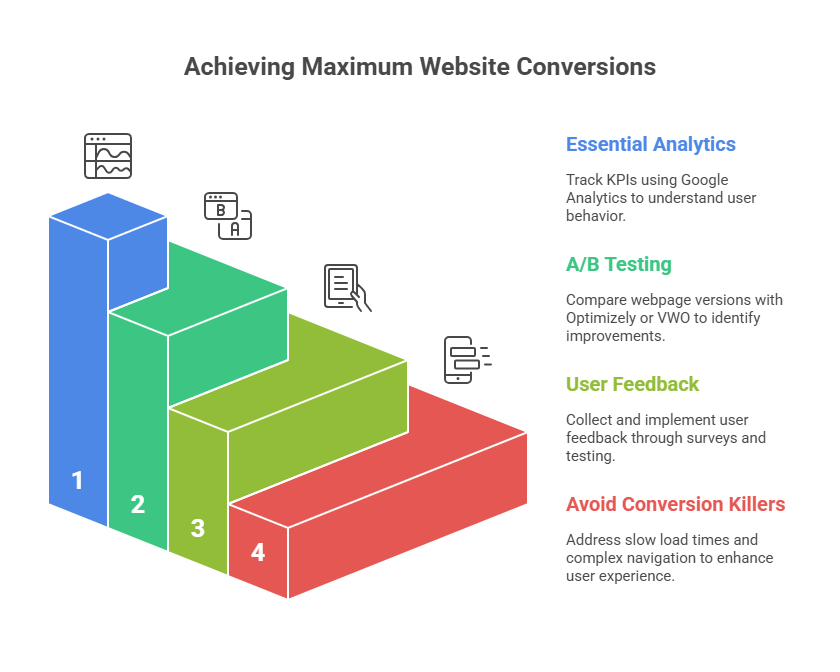
Conversion rate optimization is an ongoing process that involves testing, analyzing, and improving your website’s user experience. To achieve maximum conversions, it’s essential to continually assess and refine your website’s design and functionality.
Essential Analytics for Tracking Conversion Performance
To optimize your website effectively, you need to track key performance indicators (KPIs) using analytics tools. Google Analytics is a powerful tool that provides insights into user behavior, conversion rates, and other vital metrics. By monitoring these KPIs, you can identify areas for improvement and make data-driven decisions.
A/B Testing Methodology for Continuous Improvement
A/B testing, also known as split testing, involves comparing two versions of a webpage to determine which one performs better. This methodology allows you to make incremental improvements to your website, enhancing its overall conversion rate. Tools like Optimizely and VWO can help you implement A/B testing effectively.
User Feedback Collection and Implementation
Collecting user feedback is crucial for understanding your visitors’ needs and pain points. Surveys, user testing, and feedback forms are effective ways to gather insights from your users. By implementing changes based on this feedback, you can significantly improve your website’s user experience and conversion rates.
Common Conversion Killers to Avoid
Certain elements can hinder your website’s conversion performance. Slow load times, complex navigation, and lack of mobile responsiveness are common conversion killers. By identifying and addressing these issues, you can create a more user-friendly and high-converting website.
Conclusion
Creating a website that converts is a multifaceted process that hinges on effective UX design and strategic conversion strategies. By understanding your visitors’ decision-making process and addressing their pain points, you can craft a user experience that drives sales and boosts conversion rates.
A well-designed website with intuitive navigation, mobile responsiveness, and optimized page load speed lays the foundation for a seamless user experience. By incorporating value-focused copywriting, social proof, and strategic call-to-action placement, you can further enhance your website’s conversion potential.
To maximize conversions, it’s essential to continually test and optimize your website, using analytics to inform your decisions and user feedback to guide improvements. By applying these UX design principles and conversion strategies, you can create a website that truly sells, driving business growth and revenue.
FAQ
What is the importance of UX design in website conversions?
UX design plays a crucial role in creating a website that converts by providing a seamless user experience, building trust and credibility, and addressing pain points.
How does mobile responsiveness impact website conversions?
Mobile responsiveness is essential for website conversions as it ensures that the website is accessible and usable across various devices, providing a consistent user experience.
What is the role of page load speed in website conversions?
Page load speed is critical for website conversions as a slow-loading website can lead to high bounce rates and decreased conversions, while a fast-loading website can improve user experience and increase conversions.
How can I optimize my website’s conversion funnel?
To optimize your website’s conversion funnel, focus on crafting compelling landing pages, strategic call-to-action placement, user-friendly form design, and an optimized checkout process.
What content strategies can drive sales on my website?
Effective content strategies that drive sales include value-focused copywriting, leveraging social proof, using visual content effectively, and presenting pricing in a compelling manner.
How can I test and optimize my website for maximum conversions?
To test and optimize your website for maximum conversions, use essential analytics, A/B testing methodologies, collect and implement user feedback, and avoid common conversion killers.
What is the significance of A/B testing in conversion rate optimization?
A/B testing is significant in conversion rate optimization as it allows you to compare different versions of your website, identify areas for improvement, and make data-driven decisions to increase conversions.
How can I improve my website’s accessibility features to boost conversions?
To improve your website’s accessibility features, ensure that your website is usable by people with disabilities, follows accessibility guidelines, and provides a consistent user experience across various devices and browsers.
Learn more in my guide on How to Choose the Right Graphic Style for Your Brand Personality

How to Choose the Right Graphic Style for Your Brand Personality - DesignByRuhul
November 6, 2025[…] Learn more in my guide on How to Build a Website That Actually Sells: The Proven UX Formula for Conversions […]